MetalsAlloy
What Are the Key Differences Between 303, 304, and 316 Stainless Steel for Machining and Corrosion Resistance?
Published:
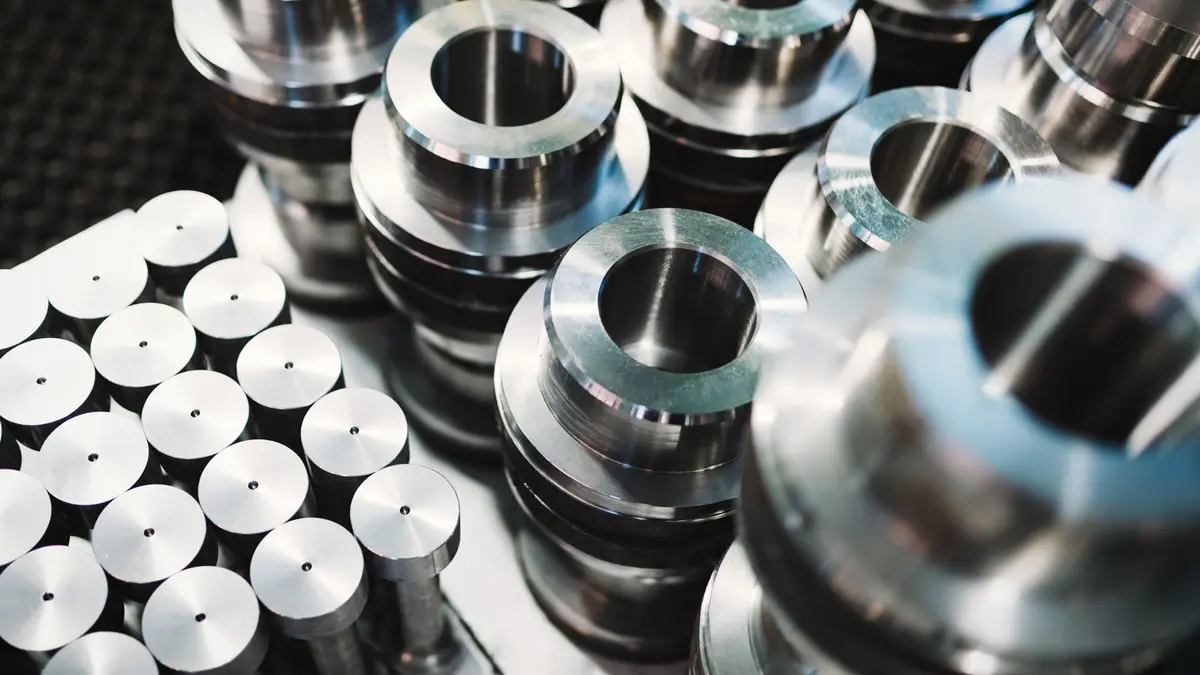
Selecting the right stainless steel grade—303, 304, or 316—is a fundamental decision for shop owners, designers, and engineers balancing machinability, corrosion resistance, and weldability. The choice impacts tool life, part performance, and project cost across CNC machined parts, architectural components, food equipment, and marine fittings. This guide compares austenitic stainless steels 303, 304, and 316 in typical bright annealed bar and rod form, focusing on their properties as supplied for machining and fabrication (cold-finished, mill-annealed condition unless otherwise stated).
Direct Answer: How to Choose Between 303, 304, and 316 Stainless Steel
- Choose 303 when the part requires extensive machining and corrosion resistance is not the top priority. Most suited for fasteners, fittings, gears, and precision parts.
- Choose 304 for the best all-around balance of corrosion resistance, formability, strength, and weldability—ideal for general industrial, food, and architectural use.
- Choose 316 where the environment is harsh, involving chlorides or corrosive chemicals—such as marine hardware, chemical processing, and medical applications—accepting higher cost and more challenging machining.
Below, we compare these three grades in-depth on chemistry, machinability, corrosion resistance, weldability, mechanical properties, and real-world use cases.
—-|——————————|——————————-| | 303 | Sulfur (~0.15%) | Improved machinability | | 304 | Cr ~18%, Ni ~8% | Versatile, all-purpose | | 316 | Cr ~16%, Ni ~10%, Mo ~2–3% | Superior corrosion resistance |
- 303 is a modification of 304 with added sulfur. Sulfur breaks up chips during cutting, but reduces resistance to corrosion and worsens weldability.
- 304 is the baseline for corrosion resistance and easy fabrication.
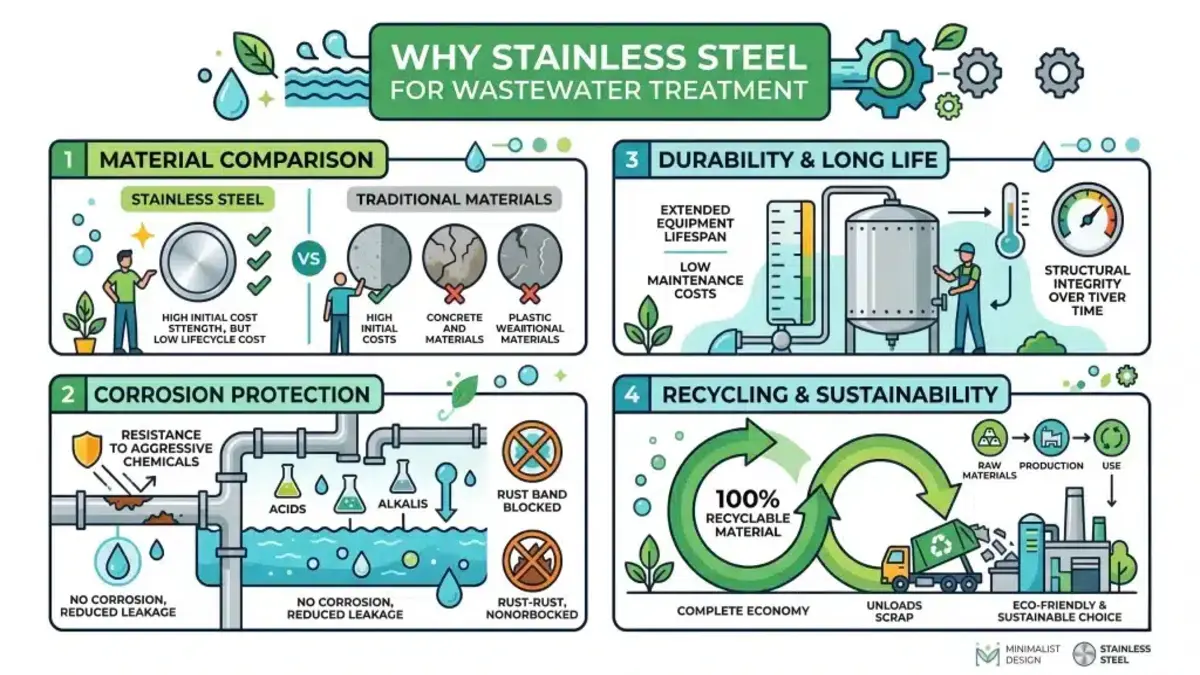
- 316 adds molybdenum, which dramatically increases performance in harsh, chloride-rich or acidic environments.
Machinability: Which Is the Easiest to Machine?
Machinability determines how fast and accurately you can cut, drill, and finish the material, affecting tool life and part cost.
| Grade | Relative Machinability (AISI SR 100=303) | Notes |
|---|---|---|
| 303 | 100 | Excellent, ideal for CNC machining |
| 304 | ~70 | Good, but work hardens more |
| 316 | ~60 | More difficult, tool wear is higher |
- 303 is specifically engineered for machining. Shops report it can be machined 20–30% faster than 304, with tool life extended by up to 40%.
- 304 is machinable, but lacks sulfur, makes long chips, and work hardens, meaning careful parameter selection and sharp tooling are needed.
- 316 is the most challenging: it work hardens even more and the addition of molybdenum increases toughness, demanding rigid setups, slower speeds, and high-quality tooling.
Summary:
- For high-volume CNC turned or milled parts with tight tolerances, 303 is preferred if moderate corrosion resistance suffices.
- For laser cutting, stamping, or lower machining demands, 304 or 316 can be used.
Corrosion Resistance: How Will Each Grade Last?
| Grade | Corrosion Resistance | Suitable Environments |
|---|---|---|
| 303 | Lowest (within group) | Dry or mild indoors only |
| 304 | Good (general industrial) | Food, beverage, non-chloride humid |
| 316 | Excellent (withstand chlorides, acids) | Marine, chemical, salt exposure |
- 303: The added sulfur forms inclusions, which can become initiation points for corrosion. Performs well in dry, non-chloride environments but will pit or rust rapidly in marine or salt-exposed settings.
- 304: Offers robust corrosion resistance against most oxidizing acids and daily wear. Handles mild chemicals, food, and atmospheric conditions well but does not resist chlorides—can pit in coastal areas, swimming pools, or with de-icing salts.
- 316: The molybdenum in 316 provides a critical boost, making it highly resistant to pitting and crevice corrosion by chlorides and chemicals. 316 lasts far longer in marine, coastal, pool, or process chemical environments.
Real World Example:
- 304 used in outdoor coastal fittings failed due to rust within a year, requiring a switch to 316, which performed reliably for years in the same service.
Weldability: Which Can Be Welded Easily?
- 303: Poor weldability due to sulfur—the material can crack, and welds will be brittle. Not recommended for any welded assembly.
- 304: Excellent weldability. Suitable for TIG, MIG, spot, and resistance welding with minimal risk of hot cracking.
- 316: Also welds very well, though its higher alloying content can require optimized filler metal selection for best corrosion resistance in heat-affected zones.
Summary:
- Weld assemblies: Avoid 303; use 304 or 316. For critical welds in aggressive environments, 316 with matching filler is preferred.
Mechanical Properties: Strength and Toughness Comparison
| Grade | Tensile Strength (MPa) | Yield Strength (MPa) | Hardness (HB) |
|---|---|---|---|
| 303 | 600 | 240 | 190 |
| 304 | 620 | 250 | 187 |
| 316 | 580 | 290 | 217 |
- All three are strong and ductile, suitable for fabrication, but 316 is slightly harder and resists surface wear better in abrasive or impact environments.
Temperature Resistance
All these grades perform well at temperatures down to cryogenic ranges. 304 and 316 especially maintain tough, ductile behavior even when cold.
Typical Applications By Grade
| Grade | Typical Product Forms | Common Uses |
|---|---|---|
| 303 | Bar, rod, hex bar | Bolts, nuts, bushings, gears, shafts, precision machined parts |
| 304 | Sheet, bar, tube, wire | Kitchen and food equipment, tanks, automotive trim, building panels, railings |
| 316 | Bar, tube, wire, plate | Marine fittings, chemical tanks, valves, pumps, medical implants, pharmaceutical tools |
Tips:
- Mass-produced, tight-tolerance parts (especially on automatic lathes): Use 303.
- Most welded or formed components: Select 304.
- Saltwater, chlorine, or harsh chemical exposure: 316 is essential, especially for long service life.
Cost Considerations
- 303 is similar in cost to 304, sometimes cheaper due to easier machinability reducing production time.
- 316 is about 20–30% more expensive than 304 and 303 (material cost alone), higher if machining costs are included.
- Using a more corrosion-resistant grade than necessary can raise costs unnecessarily; conversely, selecting a cheaper grade that fails prematurely incurs far higher replacement and reputation costs.
Environmental and Sustainability Notes
- All three alloys are fully recyclable.
- Longer service life (thanks to higher corrosion resistance in 304 and especially 316) reduces environmental impact by minimizing replacement cycles.
Summary Table: Quick Selection Guide
| Property/Need | 303 | 304 | 316 |
|---|---|---|---|
| Machinability | Excellent | Good | Moderate/Difficult |
| Corrosion Resistance | Fair (dry, mild) | Good (general) | Excellent (chlorides) |
| Weldability | Poor | Excellent | Excellent |
| Cost | Low–modest | Modest | Highest |
| Typical Use | Machined parts | Food, arch., auto | Marine, chemical, med. |
Practical Selection Advice
- Choose 303: When volume CNC production efficiency and precise tolerances matter; avoid in wet or corrosive environments and do not weld.
- Choose 304: As the standard grade for most fabrication requiring weldability, corrosion resistance in non-chloride settings, and good all-around properties.
- Choose 316: Where the application faces saline, acidic, or aggressive conditions, and premium corrosion performance outweighs machining cost and difficulty.
Important Note on Product Form and Condition
Guidance here specifically applies to austenitic 303, 304, and 316 stainless steels supplied as cold-finished or mill-annealed bar, rod, sheet, tube, and their standard tempers. It does not apply to cast or specialty variants.
Final Thoughts
Material selection for stainless steel CNC machining, fabrication, and product design isn’t “one size fits all.” Analyze environment, part function, and production method before picking. The right choice—303, 304, or 316—optimizes durability, productivity, and cost-effectiveness for each unique application.
References
303 vs 304 vs 316 Stainless Steel for Swiss Machining. (n.d.). falconcncswiss.com. https://falconcncswiss.com/303-304-316-stainless-steel-swiss-machining.html
303 vs 304 vs 316 Stainless Steel Which Is Best for Your Machining Project | CNC Precision Machining Service. (n.d.). worthyhardware.com. https://www.worthyhardware.com/news/303-vs-304-vs-316-stainless-steel-which-is-best-for-your-machining-project
303 vs 304 vs 316 Stainless Steel Which Is Best for Your Machining Project | CNC Precision Machining Service. (n.d.). worthyhardware.com. https://www.worthyhardware.com?p=38920
303, 304, and 316 Stainless Steel Comparison Guide. (n.d.). ambicasteels.com. https://www.ambicasteels.com/blog/303-304-and-316
304 vs. 316 Machining Stainless Steel - Geospace. (n.d.). geospace.com. https://www.geospace.com/news/304-vs-316-machining-stainless-steel
Stainless Steel 303 vs 304 vs 316 - JC RAPID. (n.d.). jcrapid.com. https://jcrapid.com/blog/303-vs-304-vs-316
Stainless Steel 303 vs 304 vs 316 - JC RAPID. (n.d.). jcrapid.com. https://jcrapid.com/303-vs-304-vs-316
What Are the Properties of 303-304-316 Stainless Steel | Clinton Aluminum. (n.d.). clintonaluminum.com. https://clintonaluminum.com?p=2340